Showing posts with label Top 10 Best. Show all posts

Wednesday, July 15, 2009

Mick's Top 10 Favorite TV Shows

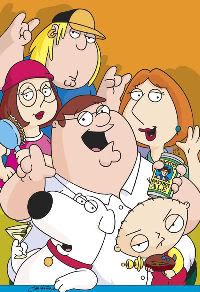
10. Family Guy


I've never sought it out. I've never made a note to remember what channels it airs on or when it airs. I've never even considered the idea of buying the DVDs. Regardless, it's a show that's never disappointed. I always go breathless laughing. I know a lot of the humor is easy. I know that the criticisms that it's just a bunch of pop culture references thrown together have merit. But I can't help it. It's just goddamn funny.


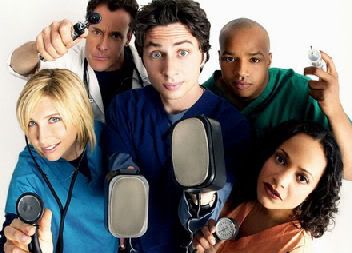
9. Scrubs


Sometimes it's way too cheesy. Sometimes the music is excessive, particularly when - and this is often the case - thematically speaking the music has absolutely nothing to do with the story. Still, Scrubs succeeds at being ruthlessly funny and achingly human at the same time. Despite how improbable and sometimes outright impossible their antics are, for example, the friendship between JD (Zach Braff) and Turk (Donald Faison) feels more genuine to me than just about any relationship I've seen depicted on television.


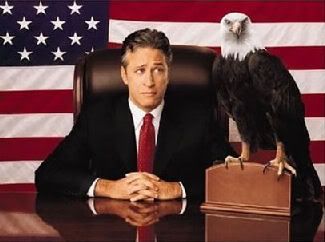
8. The Daily Show


I've watched it from the very beginning, from back when Craig Kilborn was hosting - back when the funniest segment was asking the celebrity guest 5 random questions accompanied with video of some dude's head exploding.

It seems stupid to even think now, but at the time I had a difficult time imagining Jon Stewart filling Kilborn's shoes. Remember, Stewart's track record with TV wasn't exactly stellar. It pretty much amounted to one or two short-lived shows on MTV back when featuring programs without music videos on that channel was still a relatively novel idea. And there's also the simple fact that Stewart's temperament is wildly different from Kilborn's. Kilborn's satire was outright mean, while Stewart can still seem almost apologetic at times for his biting commentary.

I'm happy to have been proven wrong - wrong to the point where mentioning that Craig Kilborn used to host The Daily Show is kind of like when you mention to some folks that Dave Grohl from Foo Fighters used to be the drummer for Nirvana. They give you this curious head tilt and make some noise to the effect that that's an interesting factoid, but you know they're going to check on the Internet before they'll believe your silly ass.


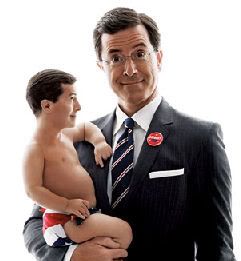
7. The Colbert Report


I'm happy to say the success of The Colbert Report is yet another example of me being proven wrong and not minding. I remember tuning in to the first show with curiosity, but feeling fairly certain it would be a failure. It was just, I assumed, a lame spin-off of The Daily Show like David Spade's abortive The Showbiz Show.

But just as Spade's tedious and cynical personality renders any solo project of his an exercise in futility, the childlike joy Colbert evokes while playing at being an even more dim-witted disciple of Bill O'Reilly is almost more fun to watch than the satire itself.


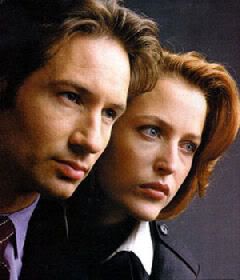
6. The X-Files


It's difficult to resist the urge to sigh regrettably every time I think of The X-Files. There were a lot of great moments in Chris Carter's one successful series, but it's tough to not feel those moments are overshadowed by failure: the failure of Carter and co. to ever make any kind of coherent sense out of their alien mythology, the failure of David Duchovny to decide whether he wanted to be a talented minimalist actor or simply an untalented robot who undercut criticism by poking fun at his near-dead performances, the failure of Carter to learn to write believable dialogue or intelligent plots, the failure of taking every successful aspect of the show and beating it to death in lieu of new ideas (e.g. the Lone Gunmen, Cancer Man, etc.), and finally the failure to live up to the unbelievable potential inherent in this concept.

But when the potential was met, it was a sight to behold. I still feel "Jose Chung's 'From Outer Space'" is one of the greatest hours of network television ever aired. Try to remember, if you care to, that if/when you watch that episode with your children, when Jesse Ventura drives into the garage of a character - a character named after the psychedelic rock singer and mentally plagued Roky Erickson - and delivers a speech that is, arguably, not only the most intelligent and complex speech ever given on network television in regards to the concept of the limits of human perception, but actually a speech that describes the very soul of the show's oft-unrealized potential, you will get to tap your child on the shoulder, point at the screen, and say "That cro-magnon freak was the Governor of Minnesota, I shit you not."


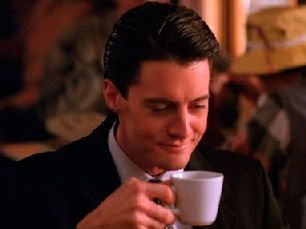
5. Twin Peaks


Twin Peaks left me shaking. Literally.

I first saw it in Tampa, under what I imagine may be unusual circumstances for Peaks fans. Before it turned into a channel of nothing but reality shows geared towards the people who don't want to feel like the idiots who watch those OTHER reality shows, Bravo used to annually air a Twin Peaks Halloween marathon. They aired the entire series, though honestly I don't remember if they aired it all at once, or staggered over a couple of nights.

I watched the first few episodes out of curiosity, and was soon hooked. I stayed up for longer than I care to admit, watching hour after hour of the series, waiting for the end. When the last episode finally came and I saw the ultimate fate of the lovable and pure-hearted Agent Cooper, it literally left me shaking. The next day in school, every time I held out my hand, it shook like I'd gotten a spinal tap of caffeine. No television show had ever made such an emotional impact on me. And if it weren't for the fact that so much of the middle of the series was craptacular, it would have a higher spot on the list.


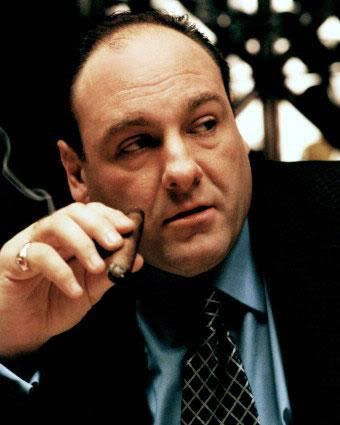
4. The Sopranos


It is difficult for me to figure out why, with so many unpleasant childhood memories involving fat Italian family members yelling obscenities at each other, that I would love The Sopranos as much as I do.

I guess what I appreciated the most about the show was its moral honesty. It never tried to fool us about its main character. Tony Soprano wasn't a misunderstood, kindhearted, gentle giant who was only doing what he had to do. He was a sadistic, insecure, murderous bully. They showed us the evil he committed, and more often than not the fallout for innocent people. If we fell for him, it wasn't for the sake of not being shown what he really was.


3. Buffy the Vampire Slayer


I didn't really get into Buffy until the show was close to ending. My girlfriend at the time and I would buy the seasons on DVD and watch them for hours at a time. For quite a while, every birthday and holiday came with one of us buying a season as a "gift" for the other, even though we both knew it was no such thing. Until we finally had all seven seasons assembled, we told family and friends to not bother with anything but Best Buy gift cards as presents.

After she dumped me and it was time to gather up all my stuff, the Buffy dvds were a problem. There was no way to remember who had bought what seasons, or which seasons were gift for who, from who. And what would be the point of taking half? How would it even be possible to take half since there was an odd number of seasons? And who would get stuck with the craptacular Season 7?

Ultimately, I decided to extend a bit of kindness to my ex and leave her the series. Besides, I was taking all the extended editions of The Lord of the Rings even though she watched them more than I did (they WERE mine, just so you know - one was a gift from her, and the other two were gifts from my family). But I didn't want to go without indefinitely. So I decided my tax refund (it was the end of last January when we split) would go to the entire series set.

I kept that promise, and immediately set about watching the entire series, every episode, one more time. And it felt like I got a little bit of my life back.

And the only reason I told that story is that I feel like I've written about Buffy online so much, that that story was really all I had left to say.


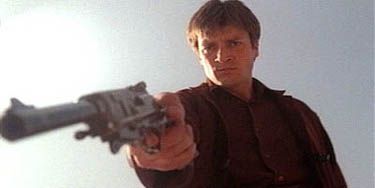
2. Firefly


Like The X-Files, "unrealized potential" is a necessary phrase when describing Firefly. The only difference is that, in the case of Firefly, it wasn't for lack of trying.

There is no doubt in my mind that, if Fox had dislodged its skull from its butt and aired the installments of Firefly in the order in which they were meant to be seen, the series wouldn't have folded after only a handful of episodes. You really, REALLY know the full extent of network television executive stupidity when you buy the DVD collection of Firefly, read the air dates of the episodes, and learn that the first two-part episode - which introduces all the plot elements of the series - was aired AFTER every other episode. After.

After.


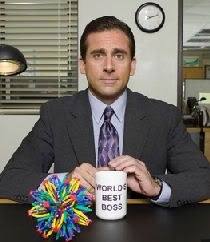
1. The Office


This was honestly a surprise to me. I've become an avid watcher of the show, to the point that I know I've crossed the geek line.

In other words, I've started pointing out plot inconsistencies and can easily remember dialogue from just about any episode. Yes. I've gotten to that place.

But I didn't think it was my favorite. When I tried to figure out which one was my favorite, I just asked a simple question - if someone offered to play episodes from any of these 10 shows, which one would I rather watch? And the answer was The Office. That simple.

I saw the first season of the original UK version, and I know there's a staunch crowd of folks who think that's the better version. I don't know. I never saw beyond the first season of what the Brits did so I can't say for sure, but I think one of the things we yanks changed was occasionally making characters like Michael Schott (Steve Carell) and Dwight Schrute (Rainn Wilson) occasionally sympathetic. I know Schott's English counterpart Ricky Gervais (David Brent) was never anything but detestable, and in fact you could say the same about Schott in the first season of the American rip-off which more closely followed the limeys. At this point, you not only DON'T thoroughly hate Schott the same way you do Gervais, but there are some episodes when you actually root for him. Does that make it a better or worse show? I don't know. But it's still funny. And it's still updog.

Wednesday, December 24, 2008

Top 10 Best Christmas Songs

10. "Oh Holy Night" by Cartman

9. "Santa Has A Mullet" by Nerf Herder

8. "A Gun For Christmas" by The Vandals

7. "Hooray For Santa Claus" by Sloppy Seconds

6. "Homo Christmas" by Pansy Division

5. "Merry Christmas (I Don't Want To Fight Tonight)" by The Ramones

4. "Christmas (Baby, Please Come Home)" by New Bomb Turks

3. "Oi To The World" by The Vandals

2. "Fuck Christmas" by Eric Idle

1. "Bitches Ain't Shit" by Ben Folds

Monday, December 15, 2008

Top 10 Best Discrepancies Between the Lord of the Rings Books And Films

10. The absence of Tom Bombadil. Unlike a lot of Tolkien fans who read the books before the release of the films, I really couldn't have given two shits about this character's presence in the adaptation of Fellowship. The main reason for his exclusion seems fairly obvious. It's the same reason for the time discrepancy between the books and the films (for those who have never read the books, or maybe have read them but have forgotten, somewhere around twenty years are supposed to pass between the time of Bilbo's birthday party and when Frodo finally leaves the Shire with Sam, Merry, and Pippin). Jackson and co. were trying to create a sense of urgency. The hobbits have the ring - which basically puts a big honking target on their backs - and nine of the most dangerous creatures ever to walk middle-earth, the ring wraiths, are on their tail. Maintaining that desperate sense of urgency in a film would be next to impossible if you decide to stage a little interlude in which the hobbits hang out with some cheery fat guy who dances around forests and sings to trees. And while Bombadil seems important to the overall Tolkien mythology, when it comes to the actual story of the Ring, he's a pretty minor character. Even peripheral characters like Radagast the Brown, the Sackville Bagginses, and Glorfindel are more directly important to the story than fat ol' Tom.

9. The battle between the Rohirrim and the Worg riders in The Two Towers. There was no such fight in the book, and I was happy to see it in the film mainly because of another discrepancy. In the books, the Fellowship fight a ravenous pack of worgs right before they go into Moria. In fact, the presence of the worgs is one of the main reasons why they decide to brave Moria. Since that fight wasn't in the first film - and since they had little to nothing to do with the rest of the story - I was afraid that we wouldn't get any worgie goodness at all in any of the flicks (there were a few in Return of the King during the siege of Gondor, but not many).

8. The Council of Elrond. This scene, in the book, is long. Arguably, too long. Maybe. I don't know. Depends on your tastes. Definitely not the best written portion of the books. You find out a lot of cool stuff about what's going on in the world that isn't 100% directly relevant to the story. But if you're someone like me who enjoys learning about the peripheral stuff in Tolkien's world, it's pretty cool. But still, translated word-for-word on screen it wouldn't have worked. I mean, even if they cut half the stuff out it would've been too long. For example, one of the biggest differences between this scene in the book and the film is that in the book, neither Elrond nor anyone else summoned all these people to Rivendell. They all just kind of end up showing up at the same time for different reasons. Boromir's there because of a prophetic dream. The dwarves are there because Sauron's people have been knocking on their doors and trying to turn them to the dark side, while at the same time while they don't know exactly what's happened in Moria, they've lost contact with Moria and are worried about their fellow shorties. The way it's done in the film comes out much more smoothly. The one difference I'm not sure about is Bilbo's absence. Though his presence in the Council isn't really, really important or anything, it does show a lot about his character and his continued obsession with the ring when he volunteers to take the ring to Mordor himself.

7. Aerwyn. Her character is just a little blip on the screen in the books. I thought the long-distance love story turned out quite nicely, and her character simply meant a lot more in the films. I am glad that Jackson and co. didn't go as far as they originally intended, however. According to the behind-the-scenes stuff in the extended editions, Jackson actually filmed scenes in which Aerwyn showed up at Helm's Deep in The Two Towers with the rest of the elf contingent. That would've been going way too far. Plus, if Aerwyn had been at Helm's Deep, how would you explain her going away after being reunited with Aragorn? And if she didn't go away, how could you have that nice, gooey reunion in Minas Tirith at the end?

6. The Scouring of the Shire. I think this is another place where I differ with a lot of Tolkien fans. In the books, the four hobbits return to the Shire to learn that a bunch of evil humans have taken over the Shire and have essentially enslaved the populace. The leader of the humans is eventually revealed to be Saruman. Now, unlike Bombadil, I do think the Scouring is important to the story because the four hobbits are able to handle the situation without any "big folk" to help them, and it shows just how much they've changed since they left. It also shows that even their idyllic little slice of heaven could be corrupted by the evil that was threatening the rest of Middle Earth. Still, its absence in the films was necessary mainly for two reasons. First, after the siege of Gondor, the battle at the Black Gate, and the destruction of the Ring, "Riot in Hobbit Town" couldn't have seemed like anything BUT anticlimax. Second, dude, do you know how long I'd been holding in my pee by that point already? Forget it.

5. Bree. In the book, there's a lot more stuff that happens in Bree. There's this whole drama involving a guy who's basically been bribed by the ring wraiths, there's the story of how Sam gets his mule, a story about the innkeeper and his connection with Gandalf, and some of it is kind of neat. Still, the movie would've been something like a half hour longer with all of it in there. And there are a few things that happen in Bree in the books that are just plain stupid. For example, one of the hobbits (either Merry or Pippin, I forget which, though I think it's Merry) end up running into a couple of the ring wraiths, and they cast some spell on him that puts him to sleep...for no discernible reason. They don't follow him to his buddies once he wakes up, they just put him to sleep. Kind of makes you wonder why they didn't just cut the little shit in half. It's kind of silly. I never got that.

4. The love affair between Legolas and Boromir. I just always skipped that part of the books. Not trying to be narrow-minded, it was just icky. And I don't care if he's an elf, I don't see how he could have that many piercings down there.

3. All of Elrond's martial arts fights with Neo. I just never thought they were relevant. Figured they should make a whole separate movie for that.

2. How Tolkien told the stories of The Two Towers and Return of the King. In the books, Tolkien completely separates the stories once the Fellowship splits. So, for example, when you read The Two Towers, it starts off with Gimli, Legolas, and Aragorn going after the Uruk-hai who captured Merry and Pippin, and the first half ends with the Battle of Helm's Deep. During that whole time, you never see or hear anything about Sam and Frodo. Then, the second half of the story starts with Sam and Frodo beginning their journey, and ends right after the fight with, um, the big spider whose name I'm forgetting and am too lazy to find out even though the books are, like, ten feet away from me, oh HELL, hold on...SHELOB! Heh, remembered before I even got to the books. Well, anyway, I guess it goes without saying, but having the movies unfold that way would have been pretty damn stupid. Though, I do think it worked very well in the books.

1. All the FUCKING singing. Yeah, there was some singing in the films. And there was a little bit more singing in the extended versions, but NEITHER had all the goddamned singing that's in the books. That, more than anything, should be enough to dissuade any Tolkien purists who think it should've been adapted word-for-word. If it had, it would've been a fucking musical.

Tuesday, September 16, 2008

Top 10 Best Numbers Between 1 And 10

10. 2

9. 7

8. 6.5

7. 5

6. 8.7388888

5. 4

3. Glen Danzig

2. 1

1. Purple.

Monday, September 15, 2008

Uncle Ick's Top 10 Favorite Comedians

10. Dick Cheney.

9. Eddie Izzard.

8. Jon Stewart.

7. Stephen Colbert.

6. Bill Murray.

5. Henry Rollins (not his spoken-word - his music is funnier).

4. Stephen Wright.

3. George Carlin.

2. Me.

1. Jesus.

Monday, September 8, 2008

Top 10 Songs I Would Want Played At My Wedding Reception

10. The Price Is Right theme song

9. "Get the Fuck Out" by Skid Row

8. "Run to the Hills" by Iron Maiden

7. "You've Got A Ugly And Stupid Butt" by Strong Bad

6. "Everything's Not Lost" by Coldplay

5. "I Don't Want To Grow Up" by Tom Waits

4. "Stop Touching My Food" by Happy Flowers

3. "I Hate Myself and Want To Die" by Nirvana

2. "Everyone I Went To High School With Is Dead" by Mr. Bungle

1. "Bitches Ain't Shit" by Ben Folds

Saturday, September 6, 2008

Uncle Ick's Top 10 Favorite Films

(For any film nuts out there, I beg you to consider the title of this list literally. In other words, do not think I am claiming any special kind of knowledge in the art of film making or that I am saying these are the top 10 best films of all time. I'm not. I believe there definitely are films on this list that any film critic or student would have to agree are - at the very least - deserving of great praise, but I'm not going to pretend that I have enough knowledge of the art of crafting movies or have even seen enough movies to make a top 10 best films of all time list. These are the ones I like. 'Cuz I like 'em. So don't get all up in my grill and shit. Um. Yo.)

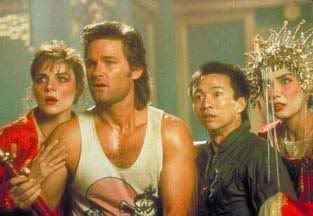
10. Big Trouble in Little China Directed by John Carpenter


There are very few stupid things I like because they're stupid. I'm not a fan of B movies, not even usually the more self-aware B movies like this one that know how silly they are and so lampoon themselves while reveling in their idiocy. But I've always liked Big Trouble ever since it came out when I was a kid. I think when I first saw it, I was somewhat aware of the self-parody aspect of it, but honestly I was more jazzed by all the guns and swords and karate and dudes shooting lighting bolts. Especially the lightning bolts. I don't know what it is. If there's a dude or a chick who shoots lightning bolts, I'm there.


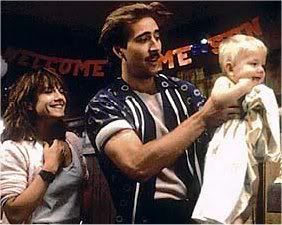
9. Raising Arizona Directed by Joel Coen


Gather around, children, and I shall regale you with tales of wonder so fantastic you could hardly believe them. Tales of dragons and princesses. Of battles won and love lost. Of gods and goddesses, of demons and devils, and of all the unfortunate souls that lay in-between. But the most fantastic of all my tales, that will make you laugh to think it could possibly be true, is of a distant past when Nicolas Cage didn't think he was John Wayne, and so made movies worth a flying shit.


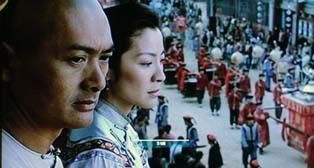
8. Crouching Tiger, Hidden Dragon Directed by Ang Lee


The funny thing is, I hated this flick the first time I saw it. I never saw it in the theater. Instead, after hearing that its director would also be directing Hulk, I bought the DVD to see if I could get a clue about the worth of the guy who would be bringing my favorite green-skinned goliath to the screen.

I remember describing it to people as "a generic kung-fu flick an hour and a half longer than it needed to be." The truth? I don't like admitting this at all, but I think that what irked me about Crouching Tiger when I first saw it was the message of female empowerment, because at the time I had some serious anger issues regarding women. I'm not proud of it, but there it is.

My mind has since changed. In fact, when I used to play World of Warcraft, there was a zone of the game - a large, dense jungle - called Stranglethorn Vale that I always loved going to, and the only reason I liked going there (as any WoW player will tell you, STV is a BITCH of a zone to navigate, and there are some who avoid it completely) is that the music for that particular zone (each zone in WoW has different music) was very evocative of the lovely, sad musical score of Crouching Tiger.


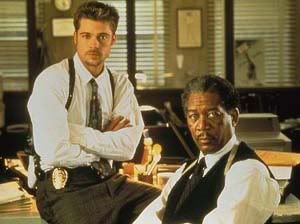
7. Se7en Directed by David Fincher


There's a lot to like about Se7en, but I think what I love most is Morgan Freeman's character.

Freeman is a marvelous actor, but I've always been bothered by his presence. Or, more to the point, how his presence is used. There's this larger-than-life thing about most of his characters. His films almost always have at least one of what I call the "Morgan Moment" - the moment when everyone has to shut up because Morgan has something Important to say. Lean On Me is pretty much nothing but a neverending series of Morgan Moments. I mean, Christ, he even had those Morgan Moments in Robin Hood.

And the result is a whole bunch of characters that just don't seem very fallible, at least in regards to morality and wisdom. But that isn't the case in Se7en. His character is like a Raymond Chandler or Dashiel Hammett noir detective whose been cursed to stay in the world too long. He is utterly depressed and cynical, only able to endure his existence by filling his life with monotonous rituals. The scene right after Brad Pitt's character schools him in the bar - when he says, in response to Freeman's cynical speeches about humanity's darkness, something along the lines of "You say you're leaving because of all these things, but really I think you say all these things because you're leaving" - when Freeman returns to his apartment and spins a switchblade into a dartboard over and over, is one the most quietly dark and disturbing moments of any of Freeman's characters. With the possible exception of his character in Unforgiven, he's never been more fallible or more human.


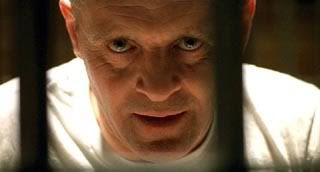
6. The Silence of the Lambs Directed by Jonathan Demme


It's unfortunate that Hollywood felt the need to mar the memory of this great film with its Lucas-like compulsion to spit out sequels and prequels that could never hope to be as good as the original.

Jodie Foster is wonderful in this film, there's no denying it, just like there's no denying Hopkins is the best reason to watch it. The Lecter of Lambs is one of the greatest villains on film. I don't think I need to say anymore. You all know it.


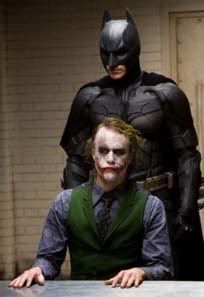
5. The Dark Knight Directed by Christopher Nolan


I don't think I can write anything that I didn't already write here. This is the best super-hero film. I doubt that will change any time soon.


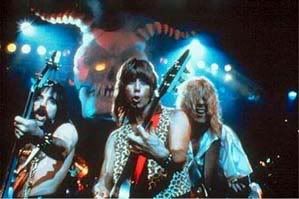
4. This is Spinal Tap Directed by Rob Reiner


As a teenager I hung out with a lot of musicians. Spinal Tap is probably the best thing they introduced me to. It just never gets, no matter how many times I watch it, not funny. I'll always laugh at Christopher Guest's claims about his amps' superior worth and I'll always laugh at Billy Crystal's cameo when he angrily tells his fellow mime-waiter "Mime is Money!" I'll always laugh when Guest, Michael McKean, and Harry Shearer try and pathetically fail at an impromptu, acapella version of "Heartbreak Hotel" at Elvis Presley's grave, or when Rob Reiner reads the band the infamous two-word review.


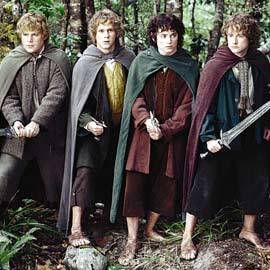
3. The Lord of the Rings Directed by Peter Jackson


(for the purposes of this list, I'm counting all three films as one, and I'd argue they are in a sense)

As a fan of the books since the third grade, I never thought anyone could pull it off. Never. Certainly not the guy who made his bones with a movie about space zombies invading New Zealand.

And I don't complain about the differences between the films and the books. In fact, I'm glad the differences were there. Why? Well, not only would a word-for-word adaptation of The Lord of the Rings be something like 80 hours long, but because of all the differences - especially because of all the things that are in the books that were left out of the films - if you've never read the books before but love the films, there are still a lot of treasures left in the books for you to explore.

I have a few gripes. I didn't like that they never even tried to make it a surprise that Boromir would fall to the power of the Ring. You pretty much know it's going to happen as soon as he shows up, particularly because of the casting. Sean Bean's built his career playing characters who are either traitors, heroes completely inadequate relative to the tasks at hand, or both. There were a few things here and there that Jackson handled with more blatant magic that I always pictured as being handled more subtly. For example when Gandalf breaks Saruman's debilitating hold on King Theoden, while reading the books I never pictured Theoden literally growing younger, but simply standing taller and straighter - seeming more youthful because of his mindset and physical presence. I didn't like that Denethor was treated as a 2-dimensional madman. I always saw him as a very tragic figure. They never even mention that it was one of the Palanthir that magically drove him insane. I mean, as much as Boromir was made to seem like a jerk at the Council of Elrond when he complained that the rest of the world was kept safe by the blood of his people, he wasn't wrong. Being the only thing standing between an idyllic fantasy world and its destruction at the hands of armies of demonic bastards would be enough to stress anyone out, even without a magical glowy thing helping drive you apeshit. And when Gandalf bonks Denethor upside the head because he was yelling for everyone to run, that was just stupid. Really. I mean, come on. Was that the day Will Farrell visited the set or something?

But at the end of the day, Jackson & co. made something astonishing, and differences from the source material be damned, they were true to the souls of the books, and that's what's important.


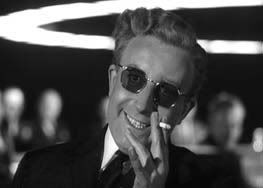
2. Dr. Strangelove (or How I Learned to Stop Worry and Love the Bomb) Directed by Stanley Kubrick


Best. Satire. Ever.

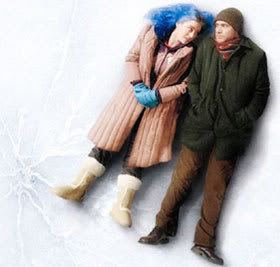
1. Eternal Sunshine of the Spotless Mind Directed by Michel Gondry


I don't usually seek out love stories, or like them. To be completely, unfortunately honest - I don't feel much like writing about this. Mainly for the same reason that I haven't been able to force myself to watch it since, well, if you read this blog regularly or know me in real life, then you know since when.

It's beautiful and funny and sweet. It will make you cry.

Oh, and after getting used to seeing Elijah Wood as a pure, cute little hobbit, seeing him play a sick little jerk who steals ladies underwear is awesome.

Thursday, June 26, 2008

Top 10 Best Things About My New Apartment

10. No parents.

9. It's only a few blocks from my job.

8. No parents.

7. I've seen two of my neighbors so far, and they're both hot chicks.

6. I don't have a working doorbell, which offers an extra barrier to parents.

5. I have my own storage space.

4. It's only a few blocks from the comic book shop.

3. Gas stove. I don't trust electrical stoves. If you can't light your cigarette on it while singing your hair, it ain't a stove.

2. It's an attic apartment. Most of the windows don't have shades, because they don't need shades. No one outside a helicopter can see inside. So I can walk around half-nekkid as much as I want without traumatizing local children.

1. Lasers (seriously).

Monday, June 9, 2008

Top 10 Best Super-Villains

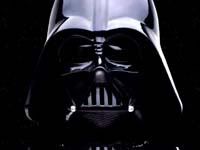
10. Darth Vader.


Vader's mark on America's pop culture landscape cannot be denied. But he's on the bottom of my list because his bark is so much worse than his bite. He fought Count Dooku, and in spite of being aided by Kenobi, got his arm cut off. He fought Kenobi twice. The last time they fought, he failed to kill Kenobi, who gave himself up to the force. The first time they fought, Vader ended up missing most of his limbs and on fire. He fought his son twice. His son escaped the first time, and kicked his ass the second. The shittiest sports teams have a better record than this asshole, and yet he's treated as the stuff of nightmares. I could kick his ass.


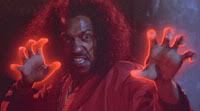
9. Sho'nuff.


Dude, that first shot when Sho'nuff breaks out the energy fists on Bruce Leroy is epic.


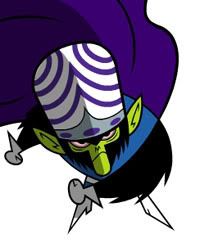
8. Mojojojo.


He's a monkey with a giant brain. His name has 3 O's and 3 J's and is one of the most deliciously fun names to pronounce. That's really it.


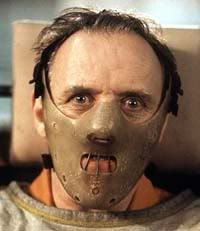
7. Hannibal Lecter.


Yes, he is a super-villain. He eats people. He has super-smelling. And he'll make you commit seppuku if you jizz on his guests.


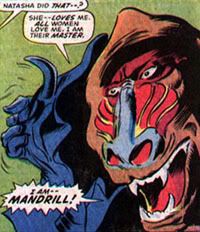
6. The Mandrill.


Kind of obscure, but he's got a special place in my heart. Mainly because he's a super-villain who's obviously gay even though this has never been explicitly mentioned in the comics.

Let me explain. The Mandrill is a mutant, like the X-men, who was born with the body of a baboon, and the power to control the minds of women. He has ambitions towards global domination. Why do I claim he's gay? Well, people with goals towards global domination generally have anger issues. If you're a heterosexual man who can make women do anything you want, in spite of the fact that you look like a fucking monkey, exactly what do you have to be angry about?

If he's gay, however, it all makes sense. Imagine how angry you would be if you were a gay man who looked like a monkey, you were gifted with mind-controlling powers but they only worked on people you didn't want to have sex with, and you were constantly coming into contact with physically perfect men in skintight clothes, but all of them wanted to beat you up. Yes, this would lead to anger issues.


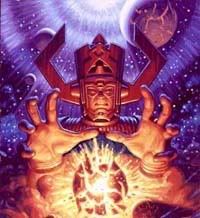
5. Galactus.


He eats planets. Not only is that unbelievably cool, but imagine the potential for humor. If he eats planets, what does he shit? If he eats China, will he be hungry again a half hour later?


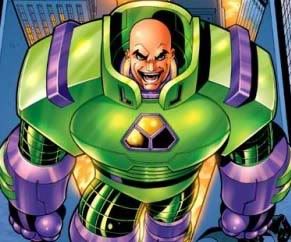
4. Lex Luthor.


Just one of the classics, he can't not be on the list. I've always been a Marvel man myself, so I'm not intimately familiar with him. The one thing that's interesting is that he's one of the few villains I liked better in the film adaptations - both in the form of Gene Hackman and Kevin Spacey. Neither played the comic book Luthor, but both were unbelievably fun. I might feel different if I'd read a lot of Superman before seeing the movies, but I didn't, and I don't.


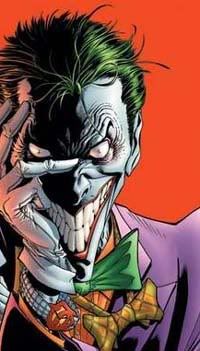
3. The Joker.


There is something so powerful about the Batman/Joker conflict that I can never clearly put my finger on. There are a lot of things going on between those two. Order vs. chaos, society vs. anarchy, and of course there's a sexual element that's potent. In fact, in spite of what a smartass I am, I'm not kidding one bit when I say I suspect that the controversy surrounding Brokeback Mountain had something to do with Ledger landing the Joker role in The Dark Knight. That may sound far-fetched, but consider whether or not you think Robert Downey Jr.'s very public drug addiction had nothing at all to do with his casting as Iron Man - the first superhero to ever suffer from chemical abuse (he's an alcoholic). Regardless, there's something more with Batman/Joker than a jester provoking a knight. To put it simply, the Joker feels like someone reveling in his deviant sexuality while simultaneously trying to "convert" Batman and feeling superior to him because of Batman's inability to surrender to his desire. Maybe that's reading too much into it, but when you think about superheroes as much as I do, it doesn't seem that crazy.


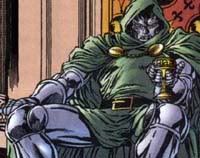
2. Doctor Doom.


If Marvel Comics gave me a call and told me I could write one issue of a comic book, and I would never be able to write another comic book ever, Doom would be my villain.

Not only is he a villainous mastermind, but can kick most heroes' asses before they even know his foot is on its way. He's noble, tragic, and utterly ruthless. The scene in Secret Wars when Doom attacks the all-powerful Beyonder is, to me, the definitive comic book super-villain moment. A Luciferean bastard striving against creation itself, knowing he can't possibly win, surviving only on his love for himself and hatred for everything else.


1. God.


He's announced his intention to destroy the world, and has a rather large percentage of humanity waiting for it hopefully. That's one devious bastard for ya.

Thursday, June 5, 2008

Top 10 Best Jobs

10. Dinosaur Hunter. No one can call you a slacker. You're going to have to work damn hard to take out dinosaurs because there aren't any left, which is why you'll never find one. So you never have to face the danger inherent in hunting dinosaurs. Regardless, people will still be impressed when you tell them you're a Dinosaur Hunter. Especially chicks.

9. Security at Christian Rock concerts. Everyone's well-behaved and on the off-chance that there are a few trouble makers, physical force will rarely be necessary. Just tell them Jesus doesn't want them stage-diving. Of course, you have to hear the music, but I don't see how that's any worse than working a concert for Third Eye Blind or Carly Simon.

8. Jesus. The biggest downside is imminent death, but you get plenty of reboots. Even if you refuse to show up to work for thousands of years, you won't get fired. Your customers will keep busy talking about how they know you'll be back at work soon. And if anyone says different, you get to fuck with them after they die.

7. Batman. You're rich. You get to beat people up. You get to boss around other super-heroes. Your boss doesn't even have your phone number, he has to flash a light in the sky. You can chill for a few weeks and just say you were lost in time or in another dimension. You can justify one-night stands by revealing your identity and telling the chicks that if you let them move in, the Joker will kill them.

6. Professional Uncle. The kids have more fun with you than with their parents, you don't have to give them as much shit as their grandparents do, and you have absolutely no responsibility whatsoever regarding their well-being other than making sure you don't say "fuck" around them too many times.

5. Manager for Menudo. All your clients are dumb-ass kids who think that your 75% cut of all their record sales isn't that big a deal, and you never have to explain why you're firing them.

4. Gene Shallot. You absolutely love EVERY. MOVIE. EVER. MADE. And no one cares that you look like Rip Taylor if Rip Taylor looked more like the clown from IT.

3. Camera man for Survivor. You spend most of your time with hot, sweaty chicks dressed in next to nothing. Of course, no one has a better lunch break than you. You get your foot-long meatball sub, bag of chips, and ice-cold diet soda, and swallow it all down five feet from the contestants with a shit-eating grin, only stopping the nonstop shoveling of food into your mouth to occasionally to give the pathetic, desperate contestants two strong middle fingers.

2. Oil executive. In spite of your negligible profits, you are able to make just enough money to live comfortably while helping the environment and offering an important resource to consumers at ridiculously low prices.

1. American Ambassador to Australia. Tropical environment, good money, you get to say you're an ambassador, and you don't really have to do anything. When have you ever read in the paper, "Tensions mounting between Washington and Sydney"?

Tuesday, May 27, 2008

Top 10 Best Things To Say On Your Deathbed Moments Before Succumbing To The Inevitable

10. GERONIMO!

9. Open the window. I'm gonna fart.

8. Here she comes! Kiss my ass Wiesenthal!

7. The treasure chest? Oh, right. I'll tell you guys where that is tomorrow.

6. Okay. Okay. This time I'm quitting smoking for good.

5. Well, shit, I hope this Atheism thing works out. Cross your fingers!

4. 42

3. My God. It's full of stars.

2. I am slain!

1. Son, listen, before I. You know. Go. There's something I have to say. You remember that whole thing that happened when you were 5? The whole thing with me molesting you? Totally as much my fault as it was your's.

Monday, May 19, 2008

Uncle Ick's Top Ten Favorite Episodes of Buffy the Vampire Slayer

I originally posted this on my first blog, The Daily Burn, and later re-posted it at Superheroes, etc., and well. What do you want? I'm lazy.

Enjoy.

WARNING: There’s no way for me to explain why these episodes deserve Top Ten treatment without giving out a SPOILER here and there. So, now you’re warned.

And so, without further preamble . . .


TEN: “SUPERSTAR”
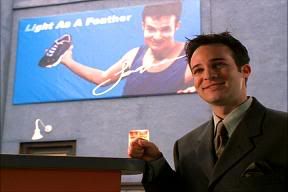
Season Four, Episode 17, Air date: 4/4/00
Written by Jane Espenson, Directed by David Grossman

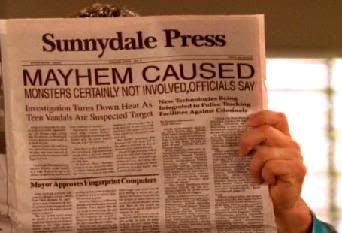
Plenty of Buffy episodes deal with magic spells and curses affecting the entire population of Sunnydale. Number Ten in Mick’s Ten Best of Buffy is one of the only episodes in which not only is the spell working as soon as the episode begins, but it actually changes the opening credits.
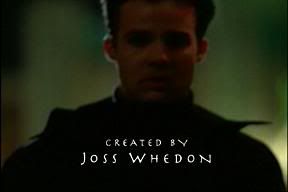
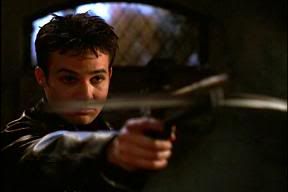
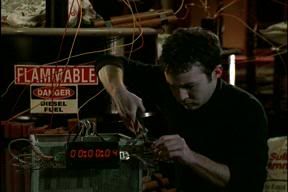


Mixed in with the credits are shots of a short, baby-faced geek brandishing crossbows, disarming time bombs, and just all-around trying and failing to appear like a mixture of James Bond and Buffy’s broody ex-boyfriend. Longtime watchers will recognize him as Jonathan, a Sunnydale High misfit who did little more than take beatings from jocks and monsters alike in the second and third seasons of the show. Before “Superstar” his only prominent appearances included a botched suicide attempt in Season 3’s “Earshot” and his presentation of a class award to Buffy later that season in “The Prom”.

Jonathan creates a whole new world in “Superstar”. Along with usurping Buffy’s position as premiere superhero of Sunnydale, in his world Jonathan starred in The Matrix, invented the Internet, produced a line of successful Big Band albums, and apparently his trumpet playing is the fire that fuels the passion of Xander and Anya’s relationship.

Besides the clever handling of the opening credits and the introduction of the spell, what I liked most about this episode was how Jonathan’s motives and actions were dealt with. While it’s clear Jonathan is the antagonist of the episode and that he wants to keep his illusion alive, he’s never depicted at being at all malicious. At worst, when Buffy begins to figure out what’s going on, he’s evasive and conflicted. When he uses his new status as confidant to both Buffy and Riley (Buffy’s Season 4 love interest), as condescending a prick as he is, he sincerely wants to help them. He’s part of something that will become a common theme in Mick’s “Ten Best Buffy”: an example that the more human Whedon & Co. rendered their bad guys, the more the characters enriched the story.


NINE: “HUSH”
Season 4, Episode 10, Air date: 12/14/99
Written and Directed by Joss Whedon

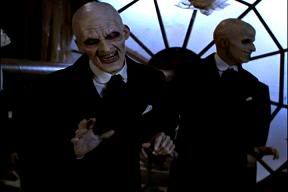
The famous silent episode of Buffy (well, not COMPLETELY silent), “Hush” introduced fans to perhaps the creepiest villains of the series: the wordless, grinning ghouls known as The Gentlemen.

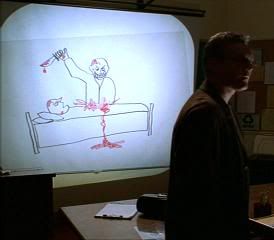
A lot is made of the silent aspect of “Hush,” and I won’t deny it’s impressive and entertaining. Perhaps my favorite scene involves Giles educating Buffy and the Scoobies on The Gentlemen while using some bloody transparencies on a projector with musical accompaniment.


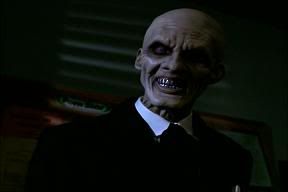
But with or without dialogue, the stars of this episode are The Gentlemen. The physical aspects of monsters on Buffy tended to be adequate at best, campy at worst. It was okay, you accepted it because it was part of the show’s charm, but it was rare that the creative staff managed to design a very simple monster that was genuinely scary. The Gentlemen are such beasts. Caught in perpetual steel grins, floating a few feet above the pavement, and exchanging polite and silent niceties with each other even as they cut out a victim’s heart, The Gentleman were - without a doubt - the most bone-chillingly creepiest villains to ever go toe-to-toe with Buffy. The silent aspect of the episode, for me, was just icing on the cake.


EIGHT: “RESTLESS”

Season 4, Episode 22, Air date: 5/23/00
Written and Directed by Joss Whedon

“Restless” is unique in a lot of ways, but first and foremost it differs in that it was the Season 4 finale, and yet was the only finale of any Buffy season that didn’t feature the climax between the forces of good and evil for that particular year. Instead, it deals with a danger that arises after the Big Bad has already been vanquished.

In the previous episode, “Primeval”, Buffy defeats a demon/human cyborg named Adam by temporarily merging her spirit with those of Xander, Giles, and Willow. In “Restless”, we find that the spirit of the first Slayer was offended by the merging as she seeks to murder Buffy’s three closest allies in their dreams.

Since most of the episode features dream sequences, there’s a lot of Lynch influence here, even a blatant homage (during Willow’s dream sequence there’s an abundance of red curtain everywhere). Since I’ve never experienced a dream nearly as coherent as most dream sequences you find on TV or film, I appreciate Whedon’s commitment to nonsense throughout the episode. Characters speak ridiculous lines of dialogue that sometimes hold metaphorical gems, and other times are just a little goofy.

Visually, it’s one of the most impressive episodes of the series. Scenes jump between color and black-and-white, locales merge so that Xander’s basement apartment seems to connect to just about every other setting in the series, and perfectly dreamlike scenarios pop up like Giles and Spike on playground swings or Giles doling out his usual research instructions to Xander and Willow, except singing them as a part of a rock band at the Bronze.
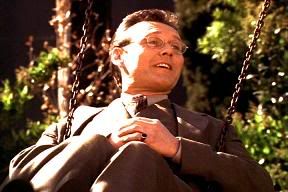
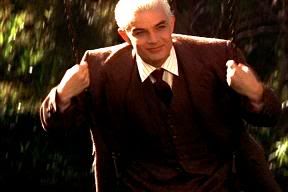


There’s also some prophesizing in the episode, some obviously intentional, some obviously not. In Buffy’s dream sequence, Tara utters the same words Dracula would speak to her in the first episode of Season 5, and follows it with “Be back before Dawn.” There’s a lot of other stuff in there, but it’s more fun to find it yourself.
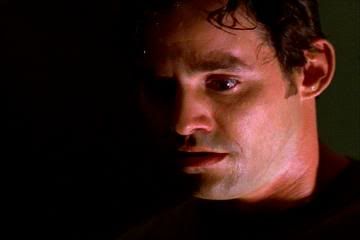


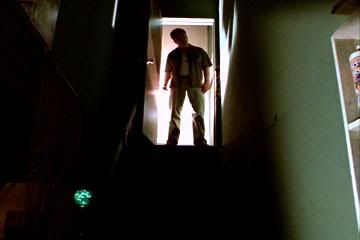
What I liked most about “Restless,” was that it was the first really sober and serious look at Xander’s character, particularly when it comes to how his situation with his parents has shaped him. It’s hinted at throughout the series, but it’s usually more of a joke than anything (usually used as fodder for Cordelia’s insults). While I know pretty much everything about Xander is treated as a joke, considering the setting (Southern California, in neighborhoods in which wallets aren’t exactly overflowing with food stamps), the “poor boy” jokes always left a bad taste in my mouth. It was one of the few aspects of Buffy that genuinely offended me, though obviously not enough to drive me away. “Restless” was the first time the surface of Xander’s relationship with his family was scratched, though unfortunately it pretty much ended there.


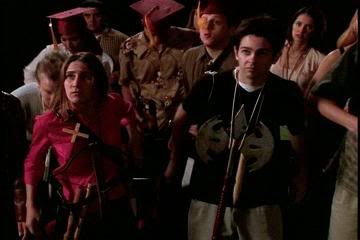
SEVEN: “GRADUATION DAY part 1 & 2"

Season 3, Episodes 21 & 22, Air Dates: 5/18/99 & 7/13/99
Written and Directed by Joss Whedon

Along with offering a thundering climax to Buffy’s third season and helping to set up the first season of Angel, “Graduation Day” marked the end of an era. It would be a mistake to claim that the finale marked a “jump the shark” point, but the feel of the show was never the same once its heroes graduated. There was a particular chemistry between the characters in Sunnydale High that would never be repeated (which, you know, was kind of the point).

“Graduation Day” wasn’t particularly unique among Buffy season finales, other than the number of new developments. The episode gave viewers a surprising alliance between the students of Sunnydale High, the school’s destruction, the death of Principal Snyder as well as some of the more peripheral characters, Buffy severing ties with the Watcher’s Council, a final break-up between Buffy and Angel as well as a bloody pseudo-sex scene between the two, and an equally bloody climax to the conflict between Buffy and Faith the rogue slayer.
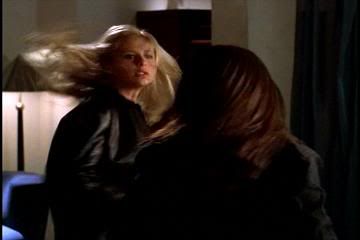


When choosing my Top Ten, I was usually careful not to choose something simply because it featured a so-called milestone event (e.g., episodes featuring the first appearances of characters who would later be key figures in the series, episodes featuring the deaths of regular characters, etc.), but “Graduation Day” is chock full of them. The episode is all about change, after all, and the new developments were necessary to get that across.

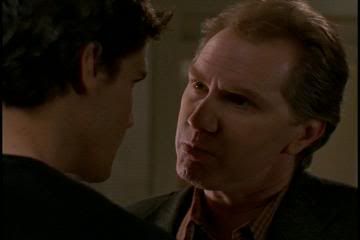
And you can’t go wrong with two of the series’ most engaging villains: Mayor Wilkins and his protege Faith. As much as I always felt Eliza Dushku was one of the least impressive actors on the series, the conflict between Faith and Buffy was riveting regardless. Harry Groener is equally fatherly, genial, and absolutely vicious as Mayor Wilkins. He remains one of the most genuinely intimidating and enjoyable Buffy bad guys. Both characters serve as examples of how the antagonists of Buffy could engage the audience better when they were more human than demon. Few of the “Big Bads” after Wilkins/Faith succeeded as well.


SIX: “BECOMING part 1 & 2"

Season 2, Episodes 21 & 22, Air Dates: 5/12/98 & 5/19/98
Written and Directed by Joss Whedon

“Becoming” would, um, become a model for future episodes highlighting the early days of recurring vampire characters. Mixing the present story with scenes from Angel’s devilish past and the beginnings of his attempts to reconcile that past, “Becoming” gave its audience a prologue that rendered Buffy’s sacrifice of Angel that much more powerful.
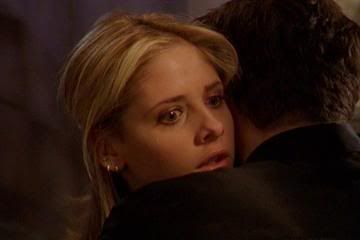


The sacrifice of Angel showed how Buffy had evolved into a woman who was willing to do the unthinkable for the sake of the world and simultaneously how she could never fit into the narrow role her heroic lineage dictated, served as a metaphor for the difficulty of letting go of destructive lovers, and gave Buffy viewers one of the most heartbreaking conclusions in the series (if not in the history of television).

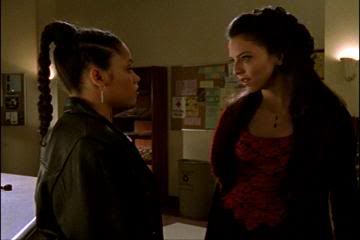
On a side note, “Becoming” also rid the series of Kendra the slayer. Not only did this make way for Faith, but also did away with criminally fake accents until they reared their ugly heads again in Season 7.


FIVE: “THE GIFT”

Season 5, Episode 22, Air Date: 5/22/01
Written and Directed by Joss Whedon

Never has a better episode of a TV series been made whose centerpiece was a fierce battle for the life of a character as annoying as Dawn Summers.

More than anything else, “The Gift” is a perfect example of how Whedon & co. manage to take a bunch of ridiculous elements that by all rights should never appear as anything but ridiculous and make them work. The combatants of the battle include a lovesick vampire, a Buffy decoy robot originally designed as a sex toy, and a vampire slayer battling a demon goddess with martial arts and a hammer stolen from a troll that would make mjolnir feel inadequate. Somehow, they make it work, and not just as a comedy.

Just as heartbreaking as “Becoming”, “The Gift” is something of a reflection of that earlier two-parter. As ill-equipped as she was for the viciousness required to fulfill her expected role, Buffy “rose to the challenge” when she sent Angel to hell. Finally and unequivocally unwilling to play the part that’s been forced upon her, Buffy sacrifices herself rather than even humor the possibility of again killing a loved one. It’s her final abandonment of everything she was supposed to be.
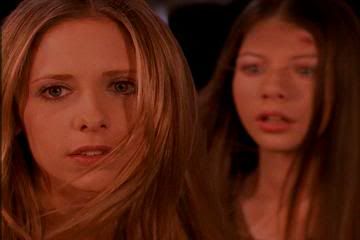


Considering her death at the end of the episode, the high quality of Season 5 as a whole, and the mixed quality of what would come after, one could argue that the series would have been better left at the end of “The Gift”.
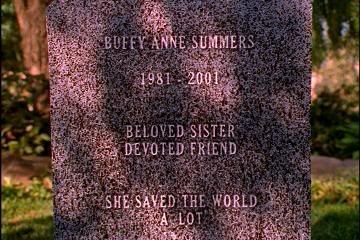


FOUR: "ONCE MORE, WITH FEELING"

Season 6, Episode 7, Air Date: 11/6/01
Written and Directed by Joss Whedon

I hate musicals.

I worked for a local non-profit musical theater organization as a carpenter/stagehand for four summers. Before the end of the first summer, I was drawing pictures of men wearing Miss Saigon t-shirts hanging from nooses in letters to friends. And no, I don’t fucking think it’s so fucking nice to have fucking Dolly right fucking back where she fucking belongs. Fuck Dolly and everyone who looks like Dolly.

So I was not happy about the prospect of having to watch a musical episode of Buffy, but I was pleasantly surprised. "Once More, With Feeling" is now one of the most repeatedly played episode on my DVD player.
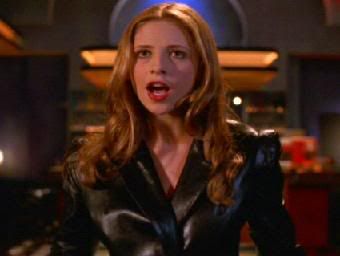


One of the things I hate most about musicals is the one-dimensional characterization. Everything, after all, is secondary to the silly singing and dancing. In the case of "Once More, With Feeling", I already knew the characters in question, and so there was never any threat that they would seem shallow or ill-conceived. Also, the sheer absurdity of the idea lent itself so well to the show.

As anyone who’s ever heard the opening theme from Firefly (which Whedon wrote) will attest, Joss Whedon has a rare gift of making his songs completely applicable to a very specific situation, while at the same time rendering them universal. Most of the episode's songs could be completely relevant outside Buffy. For example a line like "Nothing seems to penetrate my heart" from "Going Through The Motions" could easily be injected into songs having nothing to do with vampires or legendary woman warriors, but it makes the line that much better when Buffy sings it as she slams a stake into a vampire’s chest.
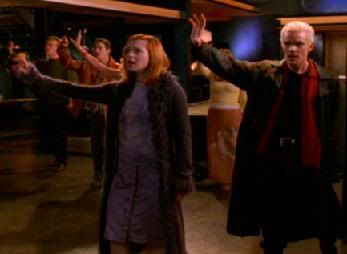


The episode also holds a special place for this humble viewer, in that - while the series finale was a year and a half way - it represents something of an emotional climax to the series. It was one of the last episodes with a unified group of Scoobies. Shortly afterwards Giles left for England, Xander and Anya split, Willow turned to the dark side, and Spike tried to rape Buffy. With the Summers home filled with Slayer-wanna-be’s in Season 7, the group of heroes would never really be the same. While I’m sure some may disagree, I feel it was also the series finale as far as quality was concerned. In fact my girlfriend (whose opinions have done quite a bit to influence my choices for the Top Ten) feels the rest of Season 6 may have suffered from the amount of time and energy put into the musical episode.
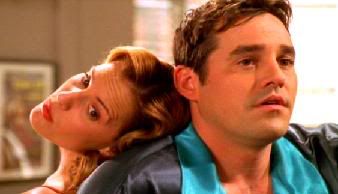


THREE: "FOOL FOR LOVE"

Season 5, Episode 7, Air Date: 11/14/00
Written by Douglas Petrie, Directed by Nick Marck

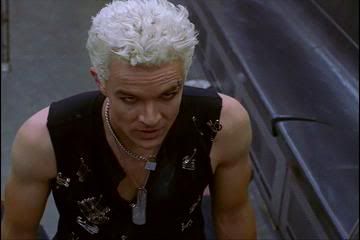
It isn't unreasonable to think that "Fool for Love" is on the list just because Spike is one of my favorite recurring characters on the show.

Still, I think its spot on the list is well-deserved. Despite the fact that one could argue its mixing of flashback scenes of Spike’s early history with the present storyline makes it little more than a clone of "Becoming", there’s a lot about "Fool for Love" that distinguishes it from the earlier two-parter and even improves upon it.
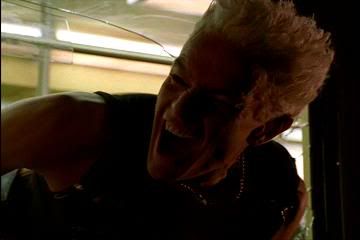


Unlike Angel or Drusilla, Spike is neither a psychotic nor a brooding guilt-machine. The element that makes him so fun to watch, an element that was never better illustrated than in "Fool for Love", is that he’s all about viciously reveling in what he is. When the 70's slayer smashes his head through the window of a subway train and he screams, the scream isn’t one of pain but of absolute joy. The joy of someone who's exactly where he wants to be.
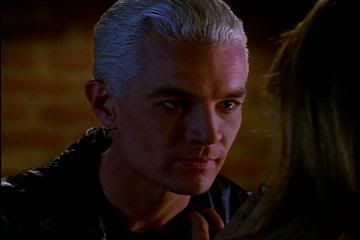


Also, while the flashbacks of "Becoming" served mainly as build-up to Angel’s fall, "Fool for love" both expanded on Spike’s character and acted as a parallel to Buffy’s inner conflict. When - in past and present - Spike brings his hands together inches from Buffy’s nose, it’s one of the most powerful moments ever between the two characters.
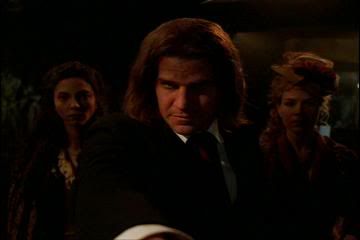


Another thing I love about the flashbacks - something I actually considered a downside until I was thinking about it in preparation for this review - is that, unlike "Becoming", Spike’s origin story is told directly from Spike’s lips and so the picture we get is tainted. Continuity hounds will remember, for example, that Angel was Spike’s sire (i.e., Angel turned Spike into a vampire). However, in "Fool for Love", it’s implied that Drusilla was his sire instead. Considering the sexuality inherent in Buffy vampirism, Spike might not like the idea of telling Buffy that it was a man who turned him, much less Angel. Likewise, Spike depicts Angel as a relatively tight-assed vampire who slaps Spike down every time he goes wild and takes risks. Of course, when Angel went to the dark side in Season 2 and allied himself with Spike and Drusilla, it was Spike who got nervous every time Angel got a little too eccentric.


TWO: "PASSION"
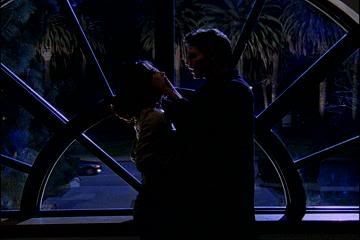
Season 5, Episode 17, Air Date: 2/24/98
Written by Ty King, Directed by Michael E. Gershman

In concept, direction, and acting talent "Passion" is uncontested in the entire Buffy collection. It’s as if Whedon injected super-soldier serum into the veins of everyone involved and said, "Oh, I forgot to tell you, this is the episode where you’re all fucking perfect."

There are a lot of things to love about "Passion". With the first death of a recurring good guy - Jenny Calendar - it’s one of the darkest episodes of the series. The funny’s still there (particularly with Cordelia’s attempts to de-invite Angel from her car), but it takes a backseat. Instead of the usual straightman/funnyman chemistry between Giles and Xander, the two nearly come to blows. Joyce’s conscious ignorance of her daughter’s weird night life begins to chip away when she finds out Buffy lost her virginity to Angel. Giles’s emotional walls come tumbling down when Jenny’s death sends him on a collision course with Angel (with a scene that makes you jump in your chair and cheer the first time you see it).
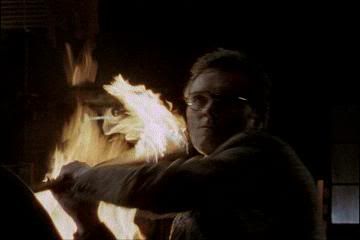


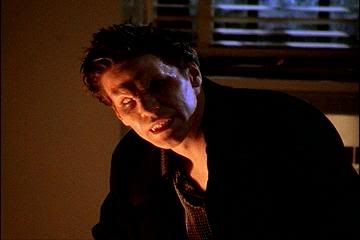
I’ve always felt Boreanaz was better as a villain than a hero and "Passion" saw his greatest portrayal of the soulless Angel. More than anything else, "Passion" conveys the sense that when it comes to Angel’s love for Buffy, nothing has changed. He still loves her, it’s just that love from a psychotic vampire (particularly one that’s been locked up for over a century) is not a good thing. Or, as Willow aptly puts it to Buffy, "You’re still all he thinks about." It's a feeling that was lost towards the end of the season, but that doesn't take away any of this episode's awesome power.


ONE: "THE PROM"

Season 3, Episode 20, Air Date: 5/18/99
Written by Marti Noxon, Directed by David Solomon

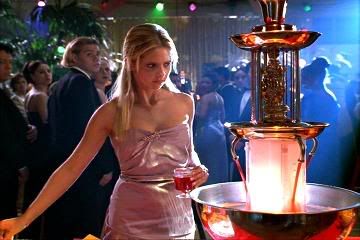
"The Prom" aired right before the two-part conclusion to the third season, "Graduation Day". Haunted by dark dreams as well as Joyce’s hard words, Angel is finally convinced that Buffy’s attachment to him will destroy her in the end, and breaks up with her. As she’s still dealing with the break-up, the Scoobies discover a Sunnydale High misfit plans on unleashing a pack of Hellhounds on the senior class during the prom. Determined to prevent the attack before so much as one demon can make its way to the school, Buffy orders the rest of the gang to the prom so they can enjoy what she suspects might be one of their final nights on Earth (by this point, the Scoobies are well aware of the Mayor’s apocalyptic plans and aren’t convinced they can stop them).
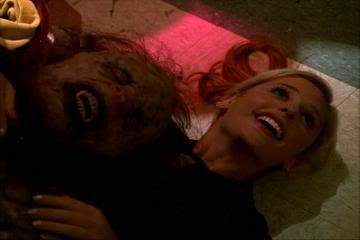


Buffy succeeds in stopping the hounds - killing the last one even as he tears at the gymnasium door - and eventually makes her way to the prom. Shortly afterwards, some of the most heartbreaking, tear-jerking, and bittersweet scenes ever aired on television unfold. If this show doesn’t make you cry, your heart’s more stonier than Ben Grimm.

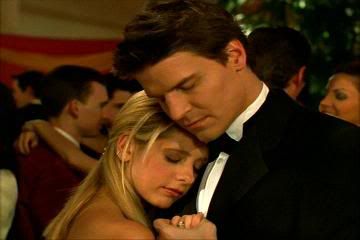
As time goes by after your first viewing, the episode just becomes more powerful. For a regular viewer of the show it’s near impossible to watch the final slow dance of the episode without thinking about your own torrential teenage days, particularly when you consider how the assembled heroes would eventually scatter; either through death, transfer to another show, or, er, cheating-by-werewolf.
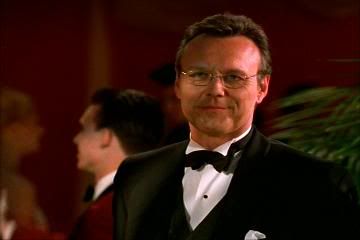


It’s also an example of how Whedon & Co. mastered the art of suspense. It's difficult for me to read or view any kind of action-oriented story and really doubt that the heroes will prevail. Whedon’s always kept me on my toes. Even more recently, with Serenity, I was all but convinced that he planned on killing the entire cast before the credits rolled. Usually, he keeps his viewers doubts alive with his unswerving willingness to mercilessly slaughter favorite characters, and usually in ways that are not nearly as dignified and heroic as Spike’s (temporary) death in the series finale. While part of me still protests the brutal end Anya met in the same episode, I have to admit that it succeeded in convincing me that the bad guys actually had a chance of winning.

With "The Prom" however, the creative team not only didn’t kill anyone, they gave viewers such a picturesque conclusion that you couldn’t help but think that things were two seconds away from going to complete Hell. It just felt too happy to not be followed up with a slaughterhouse.
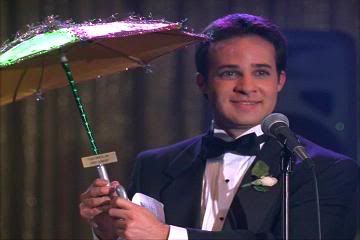


The first stop at cheesiness is Buffy’s receipt of the Class Protector Award from the Prom Committee. The creative team, as usual, diffuses the cheesiness with well-placed humor, and after three years of Buffy’s selfless heroics for the sake of a seemingly ungrateful student body, she finally gets the recognition she’s deserved. Like the earlier episode "Gingerbread," it touches upon what might be considered a glaring discrepancy in the series: the sheer number of battles between the heroes and clearly supernatural beasts vs. the town’s apparent ignorance of anything strange going on. You can’t help but wonder, with three years of Sunnydale High superheroism under her belt, why the sheer numbers of students Buffy had saved hadn’t helped her get a notch or two up the social ladder. With the restraints of cliques and high school social status about to dissipate, the students finally show their true colors. It’s not only a surprisingly affecting scene, but absolutely necessary. Without it, the Scoobies’ recruitment and organization of the senior class at the end of "Graduation Day" would never have made sense.
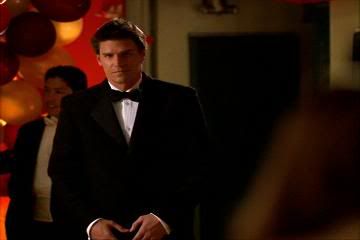


Angel’s appearance in the last few minutes shouldn’t affect you, but it does. You can’t help it. You’re softened a little by Xander’s final peacemaking with Cordelia, reduced to the durability of Nerf by the award ceremony, and when Angel shows up - even though you knew as soon as he broke up with her that he’d show up at the prom anyway - you’re done. It’s over. You’re a weep-monster.

"The Prom" was an example of how Whedon not only wonderfully mixed elements of drama, horror, and humor, but also how he turned the horror genre on its head. Just as Buffy was the young, attractive teenage girl who was predator instead of prey to the monsters and villains of horror and slasher flicks, "The Prom" was both a parody of, and a victorious middle finger to, films like Prom Night and Carrie that made high school proms one of the favorite homes of fictional bloodbaths. It was the perfect embodiment of the conceptual genius behind the series, which is why, in my humble opinion, it deserves the title of Best Buffy ever.